

Riding Through January
Finding Kindness, Nature, and Hope in Uncertain Times

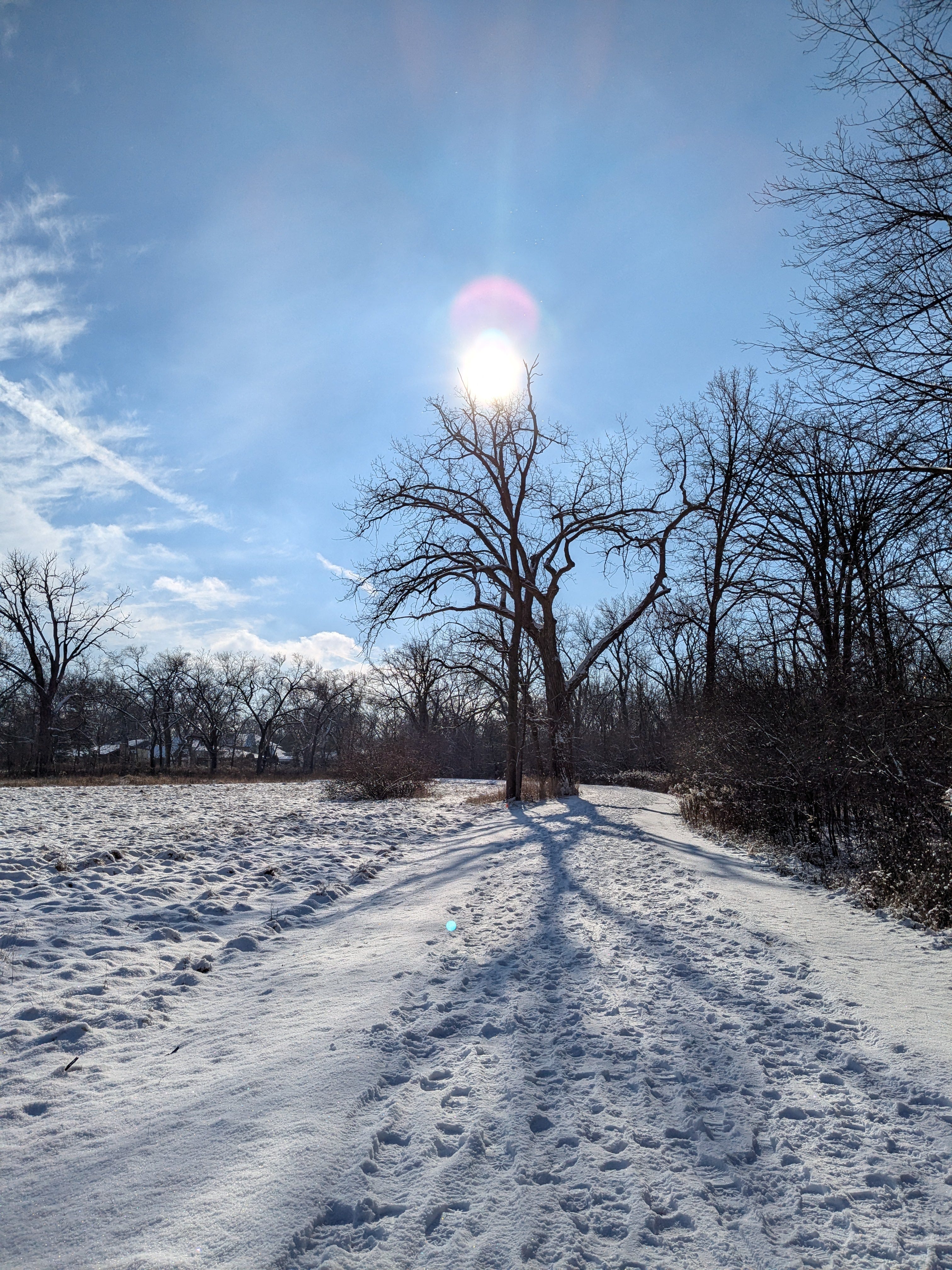
I consider January my least enjoyable month.
January brings uncertainty. Though I’ve put to bed another year, I wake to a new one, and with that comes unpredictability. Perhaps I could call it “senior thinking” when increased age makes one more wary of what a new year will bring—a negative instead of positive thinking.
January is a month of frigid cold and whipping winds, calling for digging boots into the hardened, icy ground as temperatures push into the negative zone. This I do not enjoy!
Nothing much happens in January. It’s a stationary-kind-of-month after the holidays of the previous year kept us all moving. I often feel that staying home and watching the world go by is more appealing than venturing outdoors and merging into the traveling world, a world that has become unfamiliar and frightening.
This week I read an article from The New York Times (Raj Saha, Zach Levitt, Albert Sun reporting) that, in part, officials have:
-Closed the border to asylum-seekers
-Unleashed masked immigration officers to make arrests on city streets
-Revoked legal status from recent arrivals
-Built tent camps
-Reopened prisons (to hold detainees)
-Pushed foreign leaders to accept immigrant detainees
-Pushed local officials to allow ICE agents into their facilities and databases
I’m sure you could add to this list. I’ll add a couple. The death of 32 people in ICE custody. The execution of an unarmed, non-threatening woman.
But my writing here is not a reflection of the current state of the world as we start a new year, and what one man and his followers have done to crack our world and each other wide open. I don’t and won’t claim to write about what we already know.
But it is a reflection of two Substack posts that recently appeared in my inbox. I wouldn’t call their arrival at the same time a coincidence (I don’t believe in those, though that’s a topic for another post) but I did find a quiet connection between the two writings.
I read both of them twice and found they echoed one another in subtle ways.
“It’s difficult to write,” as Anne Beall confesses many reasons why in her Substack, It's Hard to Write: A search for understanding in a broken world.
“It’s hard to write when the world seems to be going up in flames—when there is such cruelty toward our fellow human beings.”
As a writer, I find it difficult, too, especially seeing such unbridled anger displayed by many against one another. Our world, as I once understood it, is no longer understood. I can only view it as a trickle-down effect—power at the top adversely affecting those at the very bottom—you and me and the collective us, the world.
As a writer, journal writing and experiencing the natural world are and always have been ways for me to break away from vitriol and images that bleed through my veins. I learned the value of our natural world and the connection we have with it as a way of finding my place and calling it home.
As I reflected in my memoir, Under the Birch Tree.
I was a walker. I would circle the house, starting in the backyard, continuing around to the side door and then to the front yard to meet a landscaped island of pussy willows, evergreens, and a black light pole stuck in the middle of the foliage. As I neared the final stretch, I released an unconscious sigh at the top of the driveway and greeted my birch tree. I noticed my buddy’s fullness, a thick base with surfacing roots, and acknowledged any changes I may have overlooked since my last survey. A gentle touch to its peeling trunk was a handshake in greetings. Its bark never broke off when I stuck my finger through a smooth papery curl dangling from its base. We danced with long leafy branches connecting, hand in hand, while dappled light illuminated our stage. Connections were learned and encouraged in this safe place. My home was underfoot and in my hands.
The second Substack, Cultivating Terraphilia was by Susan J. Tweit, Walking Meditation Year of Contemplative Practice.
“In these heart-cracking times, we need contemplative practices more than ever. They help us find our still center, our inner strength and resilience, the courage to act from our whole selves, to find creative ways to grow life and living.”
“My form of walking meditation—striding along solo, in silence, outdoors—restores my mental, emotional and spiritual balance,” says Susan.
But there was a little more happening beyond their words.
Two accompanying photos in Cultivating Terraphilia—moss greened by melting snow in the gaps of flagstones and chrome-yellow dots of lichen on the bark of an old pear tree—called my attention.
In all that is going on in our world, the examples of moss and lichen, thrive and grow in all their color and life, even amidst the unwavering cold stones and the roughness of tree bark.
The photos made me smile in the wonder of a contrast in being.
I thought of the small moments I had captured, too, with reflections of good found in adversity.


Especially the sun and sky, mixed like a cocktail, to taste pleasant and sweet.


When I stepped outside early this morning to fill the bird feeder, I noticed snow had fallen overnight. Despite the harsh single-digit temperatures and sub-zero wind chill stinging my hands and face, there was a glow of bright white underfoot and a horizontal golden rim of light bisecting the vertical pines and skeletons of oaks bringing calm and peace.
Upon a deep breath, I smiled.
After a terrible car crash last fall, that following morning at dawn, I walked to a large window in my hospital room. Thin lines of morning light bled through the narrow slats of the shades despite their closure. I couldn’t figure out how to open it. “Yes, it is tricky,” the nurse said, opening them for me. I held anticipation of what was on the other side. The slats parted, and my view was filled with light and green, trees nudging close to one another. The sun crept over the canopies, eager to meet me in the distance. Through my teary vision, wishing to be there,
I still had a reason to smile.
I want to share with you a book I turn to often. Written by a fellow author, Donna Cameron’s multi-award winner, A Year of Living Kindly. It returns us to a soft place of contemplation and strength through what we can do. Kindness is our collective simple act with lasting, impactful consequences. It’s our strength and our empowerment, an antidote to my sometimes overwhelmed self.
Despite how we may think there’s more wrong with our world than there is right, there’s always a little something to grasp. For some it’s hope and writing; for others, it’s walking meditations.
And just when we least expect it, we find something that makes us smile, even though it may be a least favorite month of the year.
It’s the simple in our complicated world.

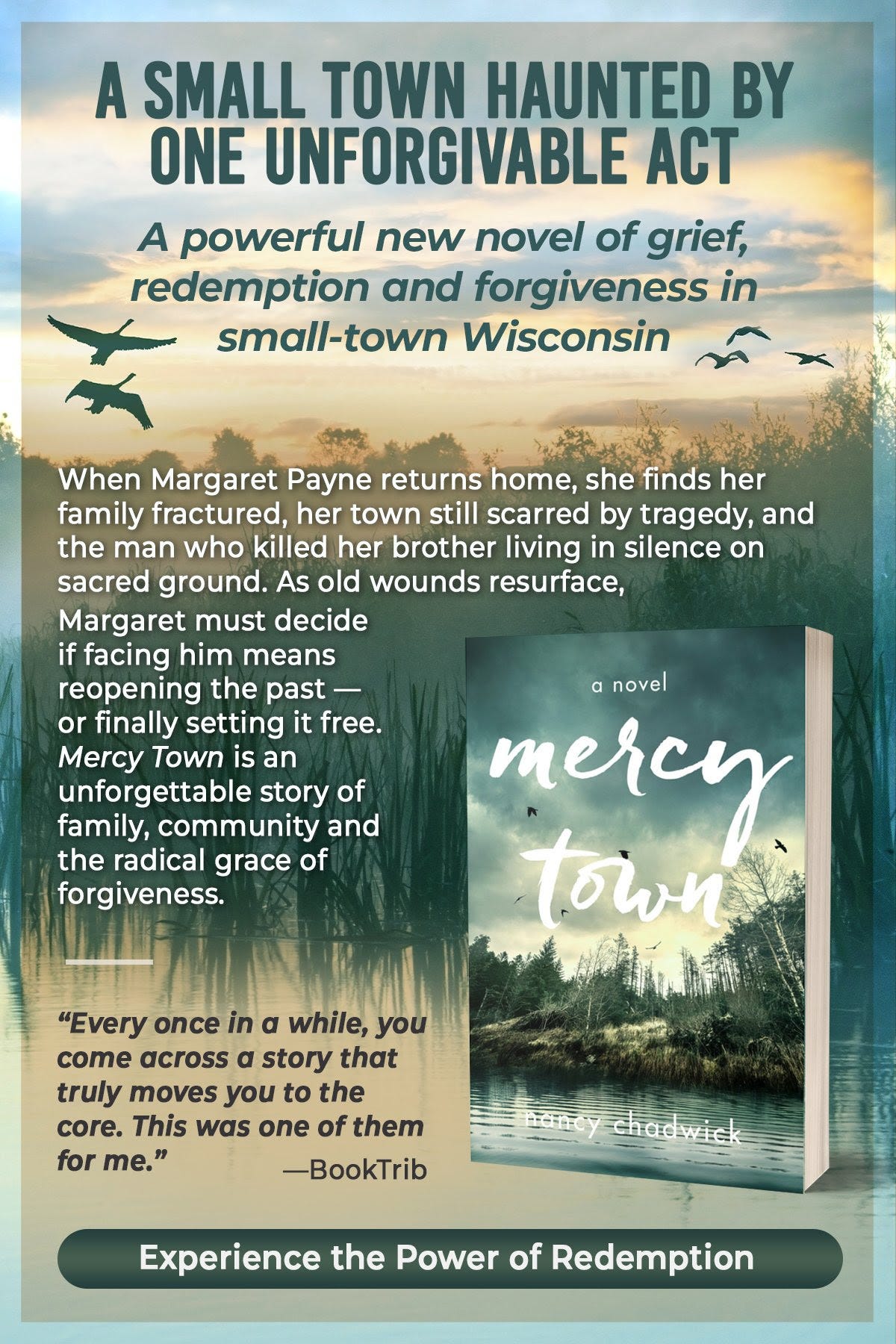
I’m so happy for Mercy Town, now a multi-award winner!
Praise for Mercy Town
Literary Titan, Gold Book Award
The BookFest, First Place, Women’s Fiction
Firebird Book Award, Native American Literature/Fiction
Independent Press Award, Distinguished Favorite
In case you haven’t heard . . .
There’s a Walk for Peace.
Nineteen Buddhist monks are on a walk . . . a very long walk . . . 120 days and 2,300 miles from Fort Worth, Texas, to Washington, D.C. to raise awareness of peace, loving kindness, and compassion across America and the world.
You can follow their journey on their Facebook page with currently close to 2 million followers.
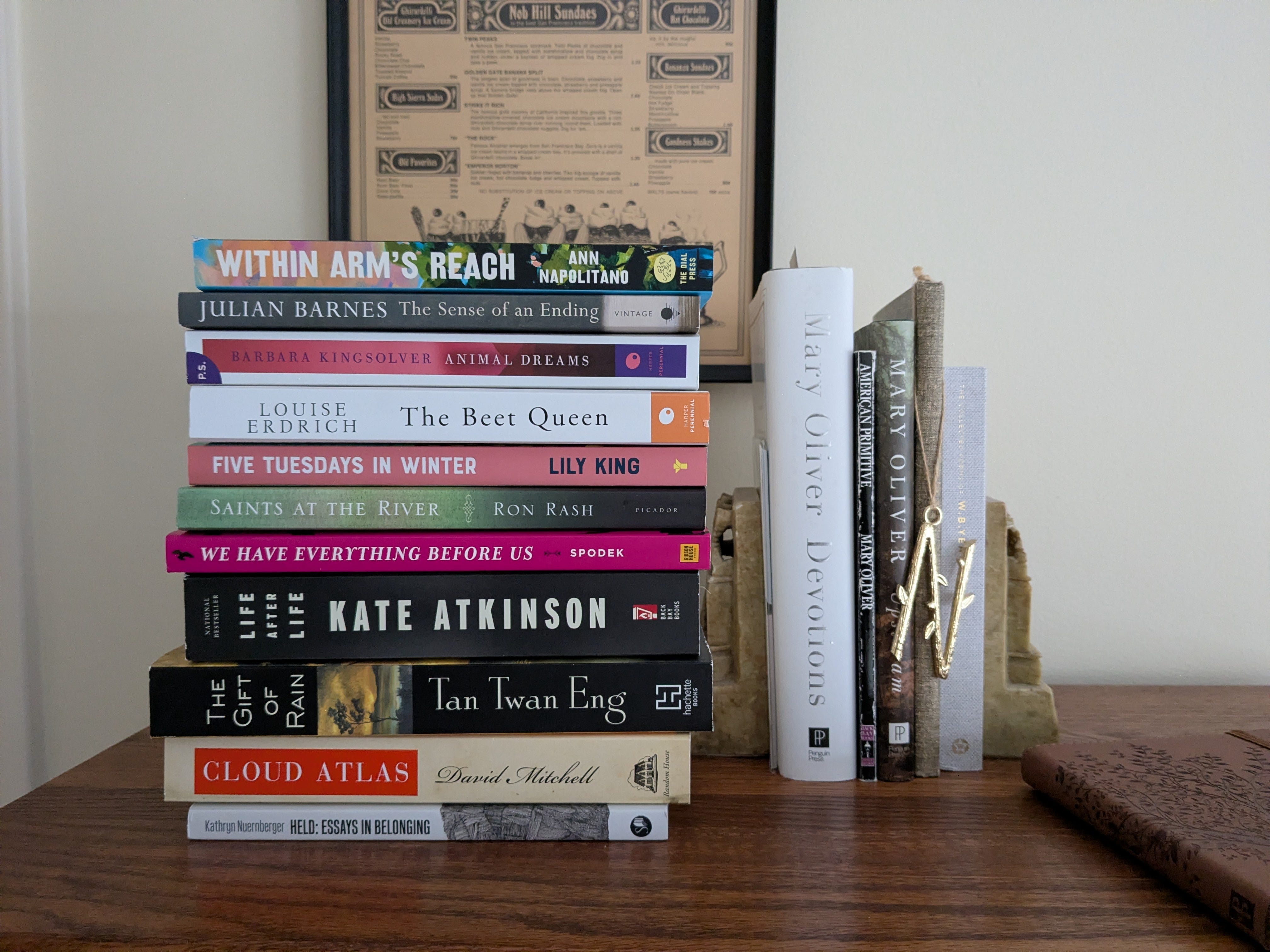
It’s a TBR that keeps on giving! How does your stack look?
Peace and loving kindness in the new year ahead.
This does seem to be a particularly relentless January, Nancy, and I share your concern for the current state of the world. It is disheartening to see what one year has wrought. Anne Beall’s assertion that it’s hard to write in these times rings true, as does Susan’s and your own reminder that we can find and renew our strength, resilience, and courage through nature and contemplative practices (in nature). We must believe in the spring that will follow this dark winter.
Thank you for your kind words about A Year of Living Kindly. What a pleasant surprise! No matter what, I shall continue to believe in the overwhelming power of kindness. I see it every day.
Thanks so much for mentioning my piece about how it's hard to write. This is such a difficult time, but people like you make this world a much better place. Thank you for continuing to write and for being one of those "helpers" Mr. Rogers mentioned.