

"Know Thyself": Enriching a writer’s craft
Last part of a three-part series

It all started when I revisited blogs from past years. I considered some of the writing to be good. Others, not so much. But how my writing had evolved! Not necessarily for better or worse, but it had progressed—deepening emotionally, intellectually, and spiritually. My words had begun to reflect a greater understanding of my desires, strengths, and weaknesses.
Looking back now, I see a clear cause and effect: as I evolved, so did my writing, growing richer with experience and self-awareness.
A recap:
In part one of this three-part series, I explored the origins of my surname, "Chadwick," and the people who shared it with me. Contrary to my assumption, “Chadwick” was not that uncommon a surname. And in part two, I reflected on how these connections formed a forest of family ties, yet I still wondered where my place was among the branches.
In this final part, I start with Socrates and his popular philosophical principle: “Know Thyself.”
Self-knowledge is a continuous practice of discovery.
Socrates believed that questioning ourselves—examining our desires, values, strengths, and weaknesses—was the foundation of a meaningful life. My writing had evolved beyond just the “what”; I was now seeking the “why.” I asked questions whose answers I did not yet know, and in the asking, I had the next questions—a continuous journey toward self-understanding.
The life span—inception to publication—of my memoir was not in years, but in decades. I quit a job that was clearly not my calling. Uncertain of my next steps, I instinctively started to write . . . again. After pre-teen, teen, and young adult years rendered stacks of years compiled in stacks of notebooks—I was pressed to learn about the adult me in the future, but not before I had a good look at my present self.
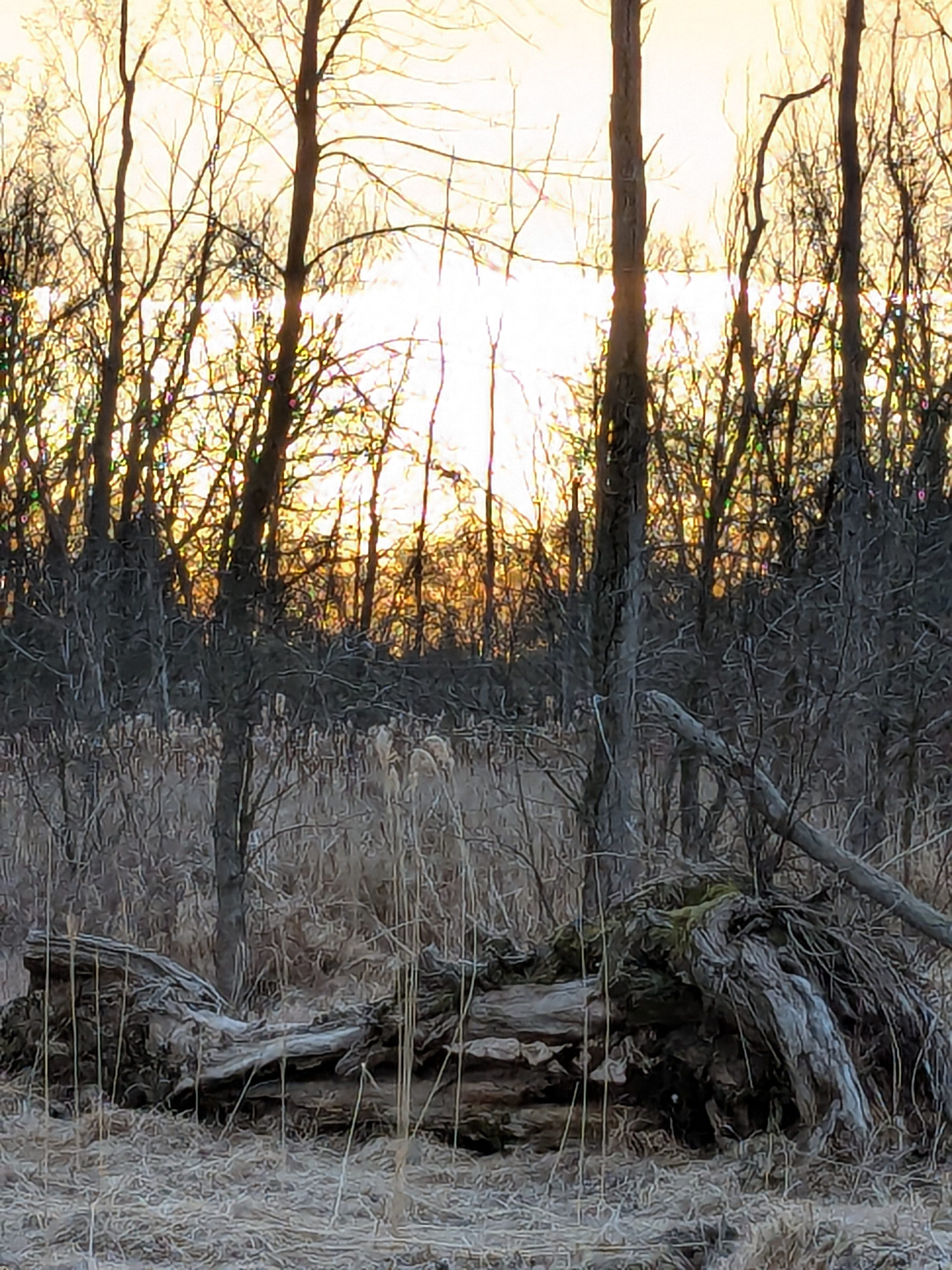
My personal essay writing is inspired by something that captures my attention—a vivid scene that strikes me one morning while walking through the woods at sunrise. The stillness, the awakening scent of damp, chilled earth, a rim of gold outlining the horizon. While walking along a path framed by the flora and fauna, my thoughts shift into reflection. I compare this spring to last, anticipate the joy of new life and earlier sunrises, and feel the dampness of rain settling on my skin.
And then I’m reminded of how I’ve come to rely on nature’s cycles. The natural world becomes a conduit for understanding myself, reinforcing my desires, reaffirming what I value, and helping me to accept my weaknesses.
Learning about the origins of my surname and searching for a sense of connection among other Chadwicks was the first step toward rooting myself firmly in the process of self-discovery.
Perhaps these writers explain it best:
Anaïs Nin says “We write to taste life twice, in the moment and in retrospect,” on how reflecting on life and understanding oneself leads to richer storytelling.
William Faulkner’s words, “If a story is in you, it has to come out,” are my words too. When I understand myself, I am more able to bring authentic stories forward.
And Emerson speaks to self-awareness in shaping one’s voice and identity, both in life and on the page when he says, “The only person you are destined to become is the person you decide to be.”
Writing with depth and courage requires turning inward with introspection. It’s self-discovery that keeps the wheels turning.
Knowing thyself may be the most important expedition any of us embark upon.
Perhaps this journey was ultimately one of seeking connection.
Do you believe you “know thyself?” Have you ever said to yourself quietly, “well, that wasn’t like me?” Click on the “comment” button and let’s start a dialogue!
“If you do not tell the truth about yourself, you cannot tell it about other people.” -Virginia Woolf.


Love this, Nancy… I’m just writing a piece on caring for grandchildren for an extended time, and my first piece of advice is “Know Thyself!”